

The “Lego” Revolution in Roofing: Powering Heritage Buildings with Zero Contradiction
- By: Cailin
- Oct 10 2026
In the heart of Beijing, where every roof tile carries a story, CAILIN has delivered something long thought impossible: a 21st-century energy upgrade for ancient architecture that leaves the soul of the building completely untouched. The familiar “solar clash” — bulky panels bolted onto a historic silhouette — is over. With CAILIN BIPV (Building Integrated Photovoltaics), the roof does not simply carry solar power. The roof is the power station.
Preserving the Past, Powering the Future
Heritage roofs present a problem that conventional solar simply cannot solve. A traditional courtyard roof is a piece of urban memory: its profile, tile rhythm and colour are protected, and no authority will approve an array that breaks that line.
CAILIN BIPV resolves the contradiction at the level of the product itself. Because the photovoltaic layer is integrated into the roofing tile rather than mounted above it, the finished roof keeps the proportions, texture and visual reading of the original. From the street, the building looks unchanged. From the meter, it is generating.
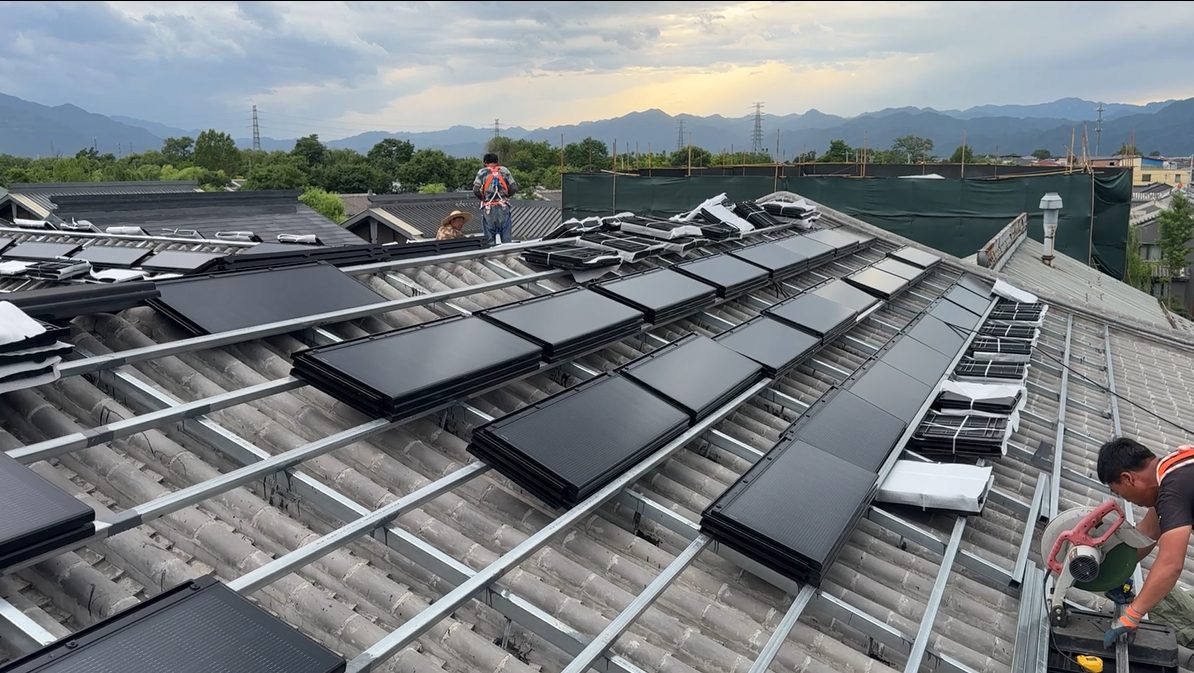
Lego-Style Simplicity: Speed Meets Safety
What is turning heads on site is not only the finish, but the method. Complex electrical engineering has been reduced to a modular, “Lego-style” assembly that any trained roofing crew can execute:
- Silver aluminium tracks are mounted with precision across the roof structure.
- Solar tile modules click and slide into place in seconds — no special tooling, no site wiring guesswork.
- Mechanical locking holds every module in position, engineered to withstand Beaufort Level 10 gales.
The result is a faster installation cycle, fewer site hours, and a repeatable quality standard — which matters just as much on a 200-square-metre villa as on a full heritage block.
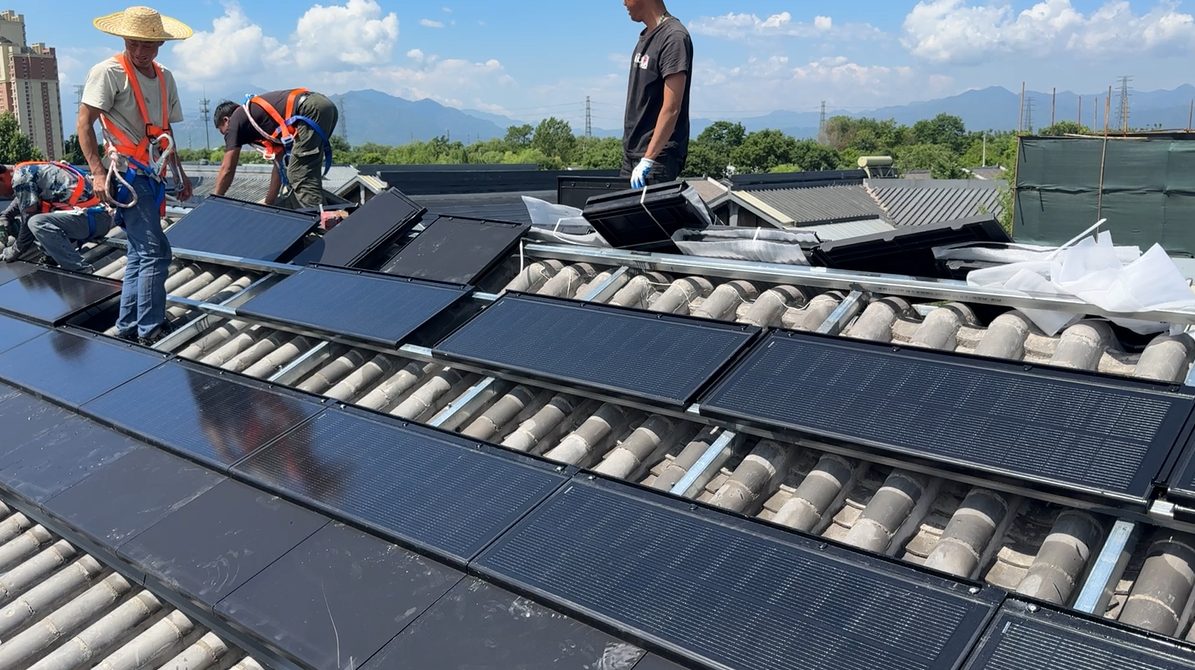
The 2-in-1 Overlay: No Demolition Required
For owners, contractors and developers, the real return on investment sits in the overlay-friendly design.
For renovations: skip the mess, the noise and the disposal cost of stripping an existing roof. CAILIN BIPV can be installed directly over the original clay tiles. It works as a protective shield and a power plant at the same time, so the old roof keeps doing its job underneath while the new layer starts paying for itself.
For new builds: why pay for roofing labour twice? One product and one installation cover both the weather envelope and the energy supply. There is no second trade, no secondary mounting system, and no compromise between waterproofing and generation.
Seamless Aesthetics
The sleek matte-black finish deliberately mirrors the geometry of traditional scalloped tiles. Whether the brief is a centuries-old courtyard or a contemporary villa, the same principle holds: solar should not be a visible compromise bolted to a building. It should read as part of the architecture.
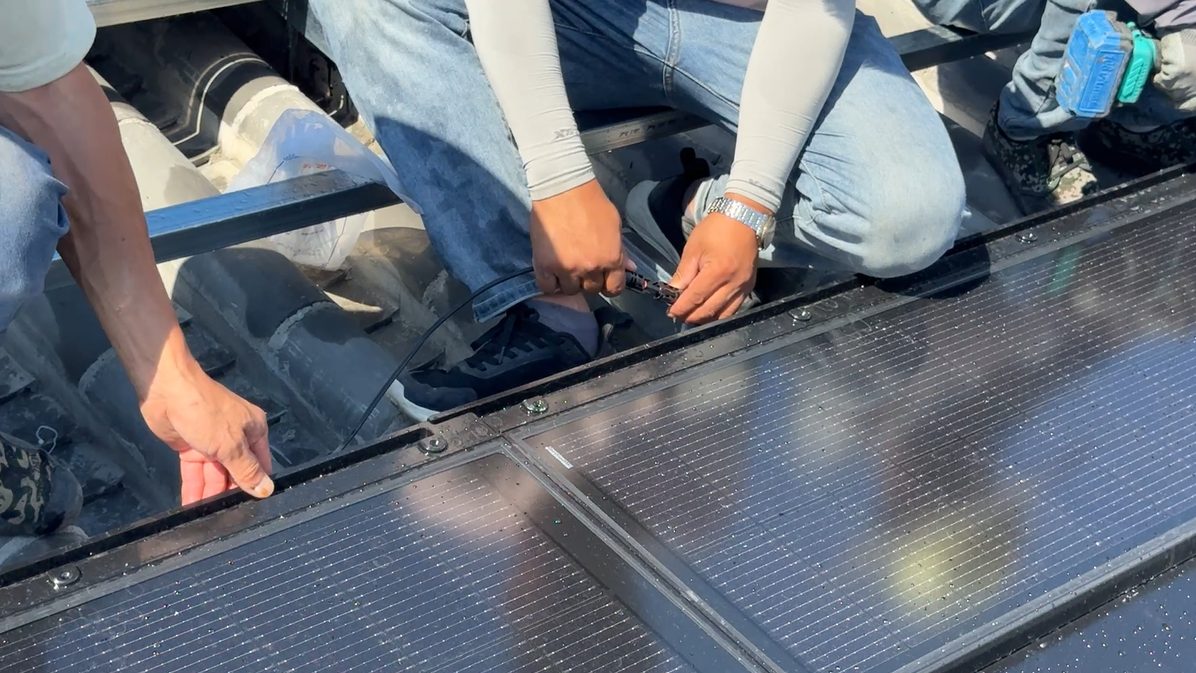
What It Means for Contractors, Distributors and Project Buyers
Heritage and conservation projects are often the hardest segment to serve: the brief demands authenticity, the client demands performance, and the site demands speed. A modular BIPV system removes the usual trade-off between the three.
For contractors, it means a single, repeatable installation sequence instead of a bespoke one-off design. For distributors, it opens a category — heritage-compatible solar roofing — that conventional panel suppliers simply cannot quote. For project buyers and specifiers, it means a documented, warrantied system rather than a patchwork of tile and panel suppliers.
Heritage and Efficiency Are Not Opposites
The Beijing project is a useful proof point: a traditional roofline can carry modern energy performance without demolition, without visual damage, and without a single original tile being removed. Green and beautiful do not have to compete. With an integrated approach, they are the same decision.
To discuss a BIPV specification for a heritage, renovation or new-build project, talk to the CAILIN team.